
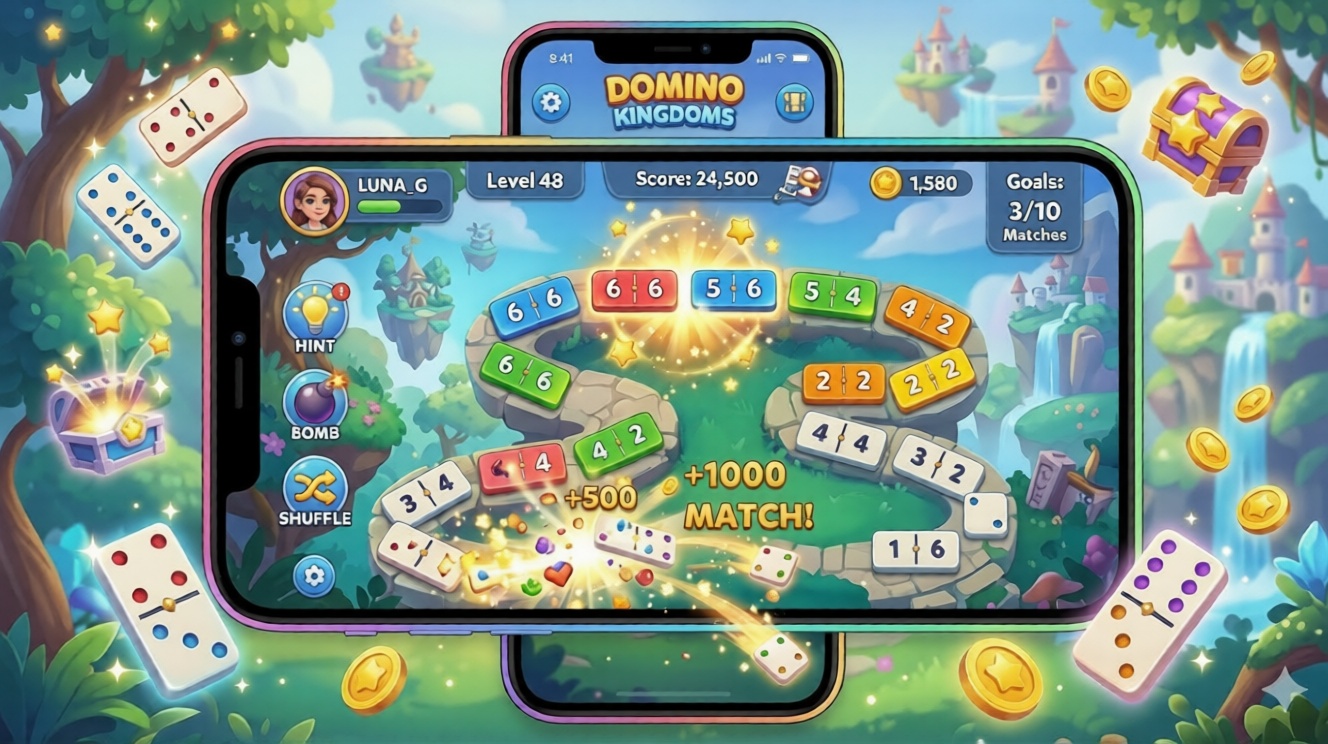
If you’ve spent any time grinding levels in Domino Dreams, you know it’s not just a simple domino puzzle game. The mechanics are designed to keep you engaged, reward smart moves, and push you to think a few steps ahead like any seasoned mobile gamer would. The game blends classic domino logic with modern mobile mechanics such as progression systems, boosters, and level-based challenges.
From a player’s perspective, the real charm lies in how simple the controls are but how strategic the gameplay becomes as levels scale. Each round starts with a board of domino tiles and a stack of playable pieces. Your job is straightforward on the surface: match tiles with the same number and clear the board. But once you get deeper into the game, the mechanics start stacking layers of strategy, timing, and resource management.
Core Domino Matching Mechanics
At its core, Domino Dreams game uses a tile-matching mechanic based on traditional domino rules. Each tile has two numbers, and you can only place a tile if one side matches the number currently active on the board.
This mechanic creates a chain reaction style of gameplay where every move matters. If you play the wrong tile too early, you might block your own path later in the round. Experienced players quickly learn to scan the board before making a move, keeping high-value tiles for later turns when the board becomes tighter.
The deck system adds another layer of strategy. If you cannot play any tile, you must draw from the deck. Managing the deck efficiently becomes essential because once it runs out, you’re stuck with whatever pieces remain in your hand.
Level Progression and Difficulty Scaling
One thing that keeps players hooked is how the game gradually increases complexity. Early levels are designed to teach the basics, but as you progress, the boards introduce obstacles, special tiles, and tighter move limits.
Later stages often require you to clear certain tiles, reach score thresholds, or remove obstacles before you run out of moves. This forces players to shift from casual matching to more tactical thinking.
From a gameplay perspective, the developers did a good job of pacing difficulty. It never feels impossible, but it definitely pushes you to use every mechanic available.
Boosters and Power-Up Mechanics
Boosters are where Domino Dreams starts feeling like a modern mobile strategy game rather than a simple puzzle title. Players can unlock or earn power-ups that help clear difficult boards or extend gameplay options.
These boosters may remove tiles, reshuffle your playable pieces, or create chain reactions that wipe multiple dominoes from the board. Timing these tools is critical. Using them too early wastes their potential, but saving them for the right moment can completely flip a losing round into a win.
Veteran players often save their strongest boosters for boss-style levels or stages with heavy tile blocking mechanics.
Event Systems and Rewards
Another important mechanic that keeps the game active is the rotating event system. Special events introduce limited-time challenges where players can earn coins, boosters, or cosmetic rewards.
Events usually encourage consistent play by offering daily objectives or milestone rewards. This system not only increases engagement but also provides alternative ways to progress without spending in-game currency.
For competitive players, events add a sense of urgency. You’re not just clearing levels anymore—you’re racing the clock to grab limited rewards.
In-Game Currency and Resource Management
Coins and other in-game resources play a major role in Domino Dreams mechanics. Players earn currency by completing levels, participating in events, and achieving milestones.
These resources are used to purchase boosters, unlock new content, or continue failed rounds. Smart resource management becomes part of the strategy. Instead of burning coins to retry every failed level, experienced players often wait for free bonuses or event rewards to maximize value.
Visual Feedback and Player Engagement
One underrated mechanic in Domino Dreams is its visual feedback system. Every successful match triggers animations, sound effects, and score indicators that make the gameplay feel rewarding.
This kind of feedback loop is essential in mobile games because it reinforces player satisfaction after every move. Even small chain combos feel impactful thanks to the polished visual design.
SEO Perspective of Domino Dreams Game Mechanics
From a search visibility standpoint, the topic of Domino Dreams mechanics has strong SEO potential because players frequently search for gameplay explanations, strategies, and level tips.
Keywords related to gameplay mechanics, puzzle strategies, and mobile game guides often attract players who are actively trying to improve their performance in the game. Creating content around gameplay mechanics also naturally supports related topics such as strategy guides, level walkthroughs, and beginner tutorials.
Search engines also tend to favor content that explains game systems in depth, especially when it answers practical questions players have while progressing through levels. Articles that explore mechanics, progression systems, and gameplay strategies can build strong topical authority around mobile puzzle gaming.
Why Players Keep Coming Back
What makes Domino Dreams stand out is how it blends classic domino logic with modern mobile design. It’s easy to start playing, but the deeper mechanics keep experienced players engaged.
Each level feels like a small puzzle that rewards careful planning, good timing, and smart use of boosters. The progression system, event cycles, and visual feedback loops all work together to keep players coming back for just one more round.
Leave a Reply